
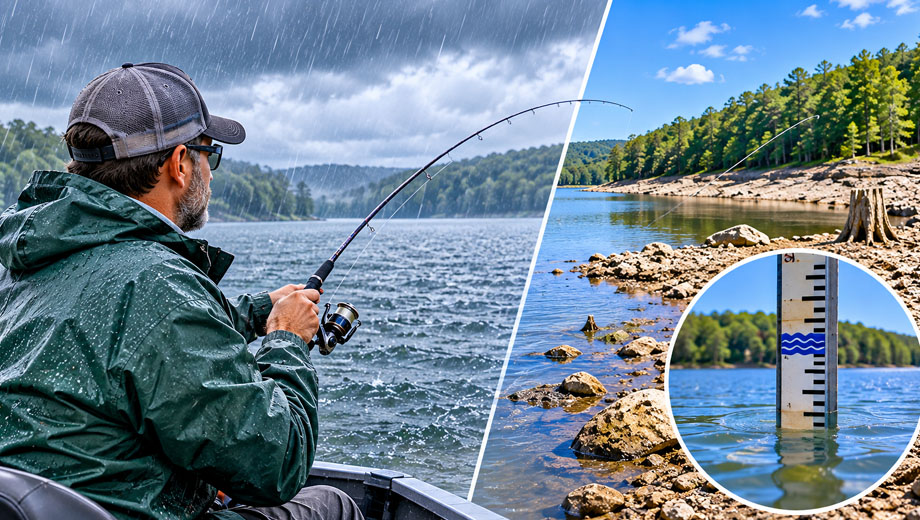
How Rain and Water Levels Affect Fishing on Lake Greeson
Fishing on Lake Greeson in Arkansas can change quickly depending on the weather. A little rain might improve the bite, while several days of heavy rainfall can completely change where fish are holding. Understanding how rain and fluctuating water levels affect fish behavior can help you have a more successful day on the water.
At Action Fishing Trips, we know that changing conditions are part of fishing. Whether you’re planning a family fishing trip or hoping to catch crappie, bass, or other popular species, knowing what to expect after a storm can make a big difference.
How Rain Affects Fishing on Lake Greeson
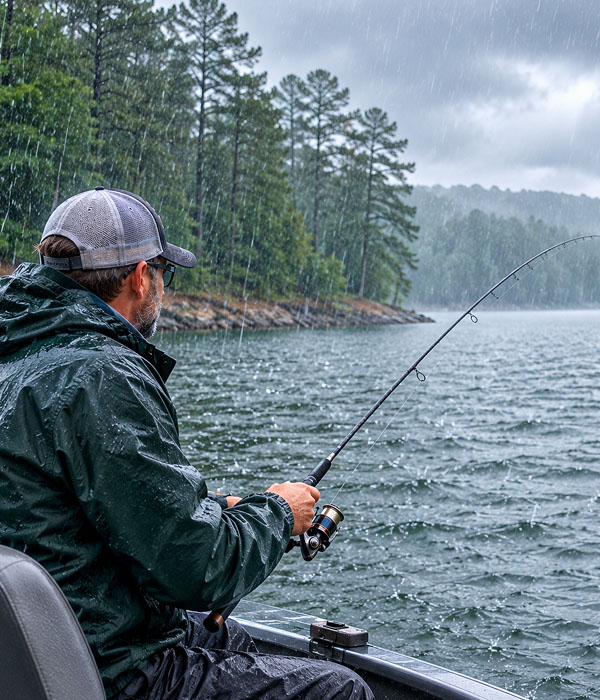
Rain isn’t always bad news for anglers. In fact, light to moderate rainfall can sometimes create excellent fishing opportunities.
Cloud cover reduces sunlight penetration, which may encourage fish to feed more actively in shallower water. Rain can also wash insects, nutrients, and other food sources into the lake, attracting baitfish and the larger fish that follow them.
However, heavy rainfall can create different challenges. Runoff from surrounding creeks and hillsides may introduce muddy water, floating debris, and sudden changes in water temperature.
When this happens, fish may move to different depths or seek areas with more stable conditions.
Rising Water Levels Can Create New Fishing Opportunities
When Lake Greeson’s water level rises after significant rainfall, previously dry shoreline areas may become submerged.
These flooded areas can attract baitfish and provide new feeding opportunities for bass and other species.
Some areas worth exploring during rising water include:
- Flooded brush and shoreline vegetation
- Creek mouths where fresh water enters the lake
- Rocky banks and points
- Protected coves with slightly warmer or clearer water
Fish don’t always move into these areas immediately, but rising water can change their feeding patterns and create opportunities for anglers willing to adjust.
What Happens When Lake Greeson Water Levels Drop?
Falling water levels can also affect where fish are located.
As shallow shoreline cover becomes exposed, fish may relocate toward deeper structure, submerged brush piles, creek channels, and drop-offs.
Crappie, for example, may concentrate around underwater brush and fish shelters, particularly when conditions push them away from shallow cover.
Lake Greeson has several established fish habitat areas, making underwater structure an important part of locating fish throughout the year.
When the lake is falling, paying attention to depth changes can be just as important as choosing the right bait.
Does Fishing Improve Before or After a Storm?
Many anglers enjoy fishing before a storm because changing weather conditions can trigger feeding activity.
Before a weather system moves through, increased cloud cover and changing atmospheric pressure may encourage fish to become more active.
After a storm, fishing conditions depend on several factors, including how much rain fell, water clarity, temperature, and how quickly the lake level changes.
A light rain followed by overcast skies may provide favorable conditions. On the other hand, heavy rainfall that brings muddy runoff into the lake can make finding fish more challenging.
The key is understanding that every storm affects the lake differently.
How Water Clarity Changes Fishing Techniques
Lake Greeson is known for its relatively clear water, but heavy rain can temporarily change visibility in certain areas.
When the water becomes stained or muddy, fish may rely more heavily on vibration and movement to locate food.
Anglers can adjust by using:
- Brighter or higher-contrast lures in stained water
- Baits that create vibration or movement
- Slower presentations when fish are less active
- Natural-colored baits in clearer water
Paying attention to water clarity helps determine which techniques are most effective on any given day.
Is It Safe to Fish Lake Greeson After Heavy Rain?
Safety should always come first when fishing after a storm.
Heavy rainfall can raise water levels, move floating debris into boating areas, and create hazards around submerged trees and rocks.
Lake Greeson is managed by the U.S. Army Corps of Engineers, and its water levels can fluctuate due to rainfall and dam operations.
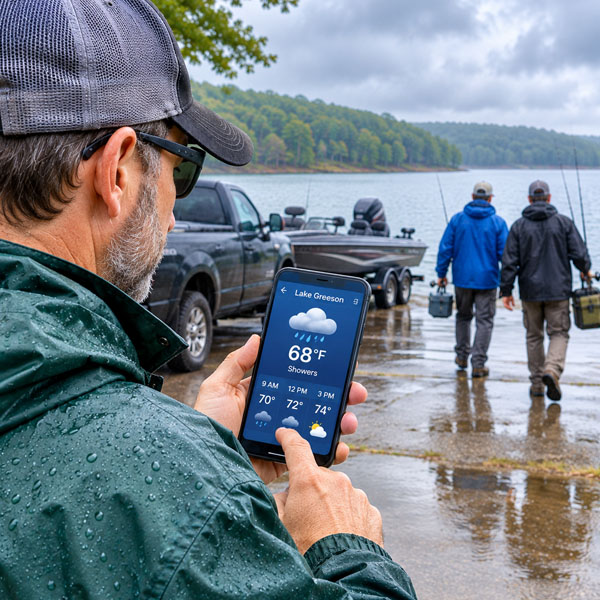
Before heading out, check the local weather forecast, lake conditions, and any applicable boating advisories. Never remain on the water when lightning or severe thunderstorms are approaching.
Why Fishing With a Local Guide Makes a Difference
Weather conditions can change fishing patterns overnight. Areas that produced fish yesterday may not be productive after a significant rainfall or sudden water-level change.
Fishing with a knowledgeable local guide can help eliminate much of the guesswork.
At Action Fishing Trips, our goal is to make your fishing experience enjoyable, comfortable, and memorable. Whether you’re a beginner learning the basics or an experienced angler exploring Lake Greeson, we’re here to help you enjoy your time on the water.
Book Your Lake Greeson Fishing Trip With Action Fishing Trips
Don’t let a little rain discourage you from planning your next fishing adventure!
Lake Greeson offers fishing opportunities throughout the year, and changing weather conditions are simply part of the experience.
Whether you’re visiting the Murfreesboro area, planning a family outing, or looking for a guided fishing adventure in southwest Arkansas, Action Fishing Trips is ready to help you get out on the water.
Contact Action Fishing Trips today to book your next guided fishing trip on Lake Greeson!