What Fishing Line Is Best for Crappie?
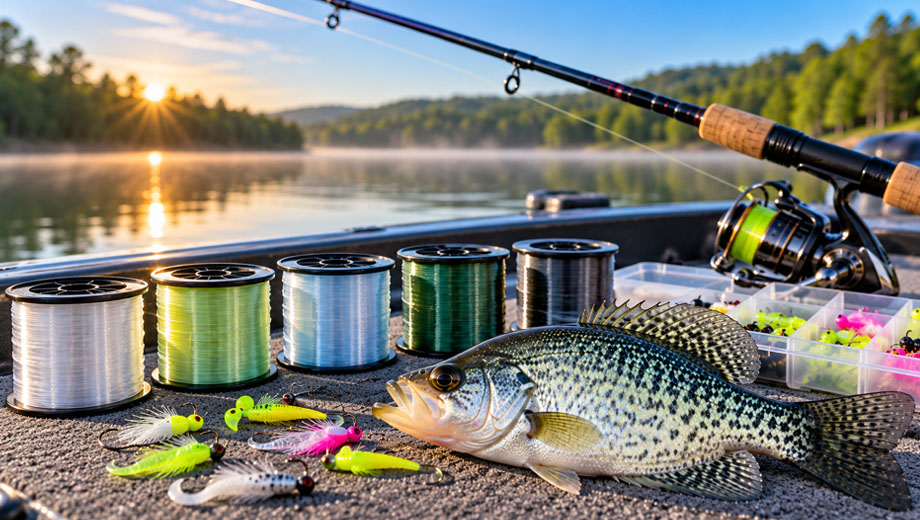
Choosing the right fishing line can make a noticeable difference when crappie fishing. Crappie often bite lightly, and anglers usually fish with small jigs, minnows, and other lightweight presentations. Because of that, line that is too heavy can reduce sensitivity and make your bait look less natural in the water.
For most crappie anglers, 4- to 6-pound test line is one of the best all-around choices.
However, the best fishing line for crappie depends on the water clarity, fishing technique, amount of cover, and whether you prefer monofilament, fluorocarbon, or braided line.
At Action Fishing Trips, we fish Lake Greeson in Arkansas, where crappie can be found around brush piles, standing timber, submerged structure, and open water. Here is what you should know when choosing fishing line for crappie.
What Pound Test Line Is Best for Crappie?
For most crappie fishing situations, 4- to 6-pound test is an excellent range.
This strength is light enough to cast small jigs effectively while still providing enough strength to handle most crappie.
A general guideline is:
- 2-pound test: Extremely light presentations and clear water
- 4-pound test: Excellent for finesse crappie fishing
- 6-pound test: Great all-around crappie line
- 8-pound test: Better around heavy cover and structure
- 10-pound test or heavier: Usually reserved for specialized situations
For many anglers, 6-pound test is one of the most versatile choices because it offers a good balance of casting distance, sensitivity, and strength.
Is 4-Pound Line Good for Crappie?
Yes.
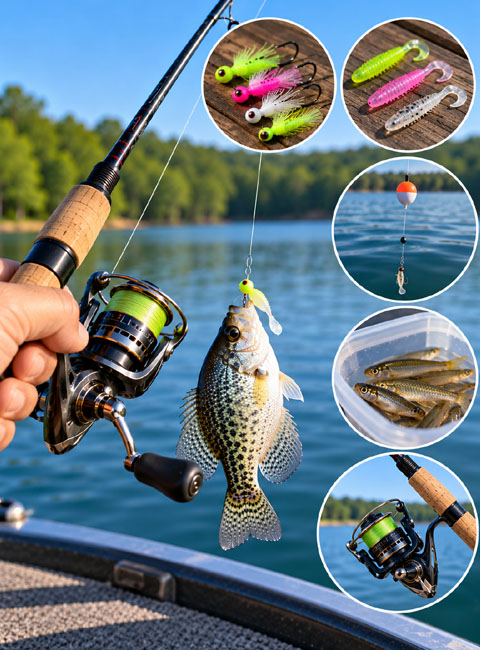
Four-pound test line is one of the most popular options for crappie fishing.
It works especially well when using:
- Small jigs
- Tiny soft plastics
- Light bobber rigs
- Small minnows
- Ultralight spinning gear
Because the line is thin, small lures move naturally through the water.
Four-pound test can also help improve casting distance when using very lightweight jigs.
The downside is that lighter line can break more easily if a fish wraps around brush, timber, docks, or other underwater structure.
Is 6-Pound Test Good for Crappie?
Six-pound test is arguably the best all-around fishing line for many crappie anglers.
It is still light enough for small lures while giving you a little more strength than 4-pound line.
Six-pound test works well for:
- Casting crappie jigs
- Fishing minnows
- Bobber fishing
- Vertical jigging
- Fishing around moderate cover
For beginners who are unsure what line to use, 6-pound test monofilament is a very good starting point.
Can You Use 8-Pound Line for Crappie?
Yes.
Eight-pound test can be useful when crappie are holding around heavy brush, submerged trees, docks, or other structure.
The additional strength may help you pull fish away from cover before they become tangled.
However, heavier line is thicker and may not cast extremely small lures as easily as 4- or 6-pound test.
In clear water, thicker line may also be more visible to fish.
For that reason, 8-pound test is usually chosen when strength is more important than finesse.
Is Monofilament Good for Crappie Fishing?
Monofilament is one of the most popular fishing lines for crappie, especially for beginners.
It is affordable, easy to use, and works well with a wide variety of techniques.
Advantages of monofilament include:
- Easy knot tying
- Good casting performance
- Slight stretch that can help prevent hooks from tearing free
- Low cost
- Wide availability
The stretch in monofilament can actually be helpful when fighting crappie because their mouths can be relatively delicate.
A little stretch helps absorb sudden movement instead of transferring all of the pressure directly to the hook.
For general crappie fishing, 4- to 6-pound monofilament is an excellent choice.
Is Fluorocarbon Good for Crappie?
Fluorocarbon can also be very effective for crappie.
One of its biggest advantages is reduced visibility underwater.
This can be especially helpful when fishing in:
- Clear water
- Bright conditions
- Heavily pressured fishing areas
- Areas where fish are being particularly cautious
Fluorocarbon is also more abrasion-resistant than many monofilament lines, which can help when fishing around structure.
However, fluorocarbon tends to be stiffer and can be more difficult to manage on very small spinning reels.
Many anglers use fluorocarbon as a leader material rather than filling the entire reel with it.
Is Braided Line Good for Crappie Fishing?
Braided line can be an excellent option for certain crappie fishing techniques.
Braid has very little stretch, which makes it extremely sensitive.
This can help anglers feel light bites, especially when fishing deeper water.
Braided line also has excellent strength compared with its diameter.
Advantages include:
- Excellent sensitivity
- High strength
- Small diameter
- Long lifespan
- Strong performance around vegetation and structure
However, braid is highly visible underwater.
Many anglers solve this problem by connecting a fluorocarbon or monofilament leader to the braided main line.
A popular setup may use lightweight braid with a 4- to 8-pound fluorocarbon leader.
Monofilament vs. Fluorocarbon vs. Braid for Crappie
Each fishing line has advantages.
Monofilament
Best for anglers who want a simple and affordable setup.
Monofilament is especially good for beginners because it is easy to manage and works with almost every common crappie technique.
Fluorocarbon
Best when water clarity is a major concern.
Fluorocarbon works well as either a main line or leader and is useful when fish are cautious.
Braided Line
Best when sensitivity and strength are priorities.
Braid works particularly well in deeper water or around structure, but many anglers pair it with a less visible leader.
There is no single line type that is best in every situation.
What Fishing Line Is Best for Clear Water?
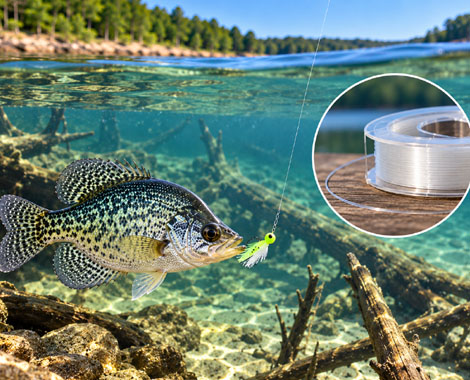
In very clear water, anglers often prefer lighter line or fluorocarbon.
A 4- to 6-pound fluorocarbon leader can help reduce line visibility around cautious fish.
Light monofilament can also work well.
When crappie can clearly see your presentation, using smaller-diameter line may help your jig or bait appear more natural.
What Fishing Line Is Best for Muddy or Stained Water?
Line visibility is generally less important in stained or muddy water.
This allows anglers to use slightly heavier line when necessary.
Six- or 8-pound test can provide additional strength around brush and structure without significantly affecting the presentation.
Crappie may also rely more heavily on vibration and movement when visibility is reduced.
What Line Is Best for Crappie Jigs?
For casting small crappie jigs, 4- or 6-pound test is an excellent choice.
Thin line helps lightweight jigs cast farther and sink more naturally.
Monofilament is a popular option for casual jig fishing, while fluorocarbon may be useful in clear water.
Braided line with a lightweight leader can also provide excellent sensitivity.
The best choice depends on the size of the jig, fishing depth, and amount of structure.
What Line Is Best for Fishing Minnows for Crappie?
When fishing live minnows, 4- to 8-pound test works well in most situations.
If fishing in open water, lighter line is usually sufficient.
If you are dropping minnows into brush piles or standing timber, slightly heavier line may help prevent break-offs.
A 6-pound test setup provides a useful balance between sensitivity and strength for many minnow presentations.
What Line Is Best for Vertical Jigging?
Vertical jigging can benefit from sensitive fishing line.
Braided line is popular with some anglers because its low stretch allows you to feel subtle bites.
However, monofilament and fluorocarbon also work well.
When fishing deeper water, increased sensitivity can make it easier to detect a crappie that lightly picks up a jig.
Does Fishing Line Color Matter for Crappie?
Line color can matter, but it depends on how you fish.
Some crappie anglers prefer high-visibility line because it allows them to watch for subtle line movement.
Sometimes a crappie bite is easier to see than feel.
Bright yellow, orange, green, or other high-visibility lines can make it easier to detect when your line suddenly jumps, moves sideways, or becomes slack.
If you are concerned about fish seeing the line, you can use a high-visibility main line with a clear fluorocarbon leader.
Does Fishing Line Affect How Fast a Crappie Jig Sinks?
Yes.
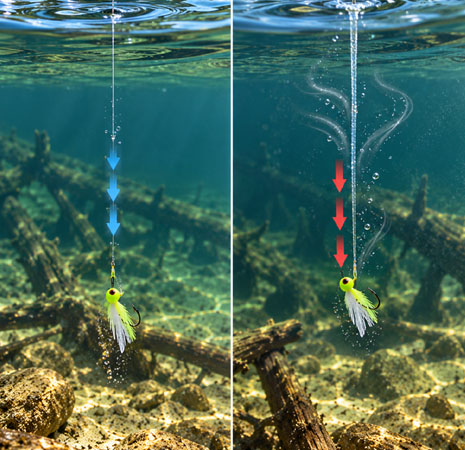
Fishing line diameter can affect how quickly a small jig sinks.
Thinner line generally creates less resistance in the water.
That can allow a lightweight crappie jig to sink more naturally and reach depth more efficiently.
Thicker line creates more resistance, which can slow the fall of very small jigs.
This is one reason light fishing line is so popular among crappie anglers.
Best Crappie Fishing Line for Beginners
For a beginner, keeping things simple is usually best.
A great starting point is:
6-pound test monofilament
It is easy to handle, affordable, and versatile enough for most crappie fishing situations.
You can use it for:
- Casting jigs
- Fishing minnows
- Bobber fishing
- Vertical jigging
- Fishing small artificial lures
As you gain experience, you can experiment with fluorocarbon leaders, braided line, and different pound tests.
What Fishing Line Is Best for Lake Greeson Crappie?
Crappie fishing on Lake Greeson often involves fishing around submerged brush, timber, and other structure.
For general fishing, 4- to 6-pound test works well.
If the fish are holding tightly around heavier cover, using 6- to 8-pound test may provide additional strength.
The ideal setup depends on where the crappie are holding and how you are presenting your bait.
Experienced anglers often change their line setup depending on the conditions instead of using the same line every trip.
So, What Fishing Line Is Best for Crappie?
For most anglers, 4- to 6-pound test fishing line is the best overall choice for crappie.
If you want the simplest recommendation:
Use 6-pound test monofilament for general crappie fishing.
From there, adjust based on conditions.
Use lighter line when:
- Fishing clear water
- Casting tiny jigs
- Using finesse techniques
Use heavier line when:
- Fishing around brush
- Fishing around timber
- Targeting crappie near heavy structure
Consider fluorocarbon when visibility matters and braid when sensitivity and strength are priorities.
The best fishing line is ultimately the one that matches your fishing technique and the conditions you are facing.
Go Crappie Fishing on Lake Greeson
Understanding fishing line is important, but learning how your equipment works on the water is even more valuable.
Action Fishing Trips offers guided fishing trips on Lake Greeson in Arkansas for beginners, families, and experienced anglers.
During your trip, you can learn how factors such as depth, structure, bait selection, rod setup, and fishing line all influence crappie fishing.
Whether you are hoping to improve your crappie fishing skills or simply enjoy a great day on the water, Action Fishing Trips can help you experience what Lake Greeson has to offer.
Book your guided Lake Greeson fishing trip with Action Fishing Trips today.